

Hutba: Pouke i poruke iz života Ejjuba, a.s.

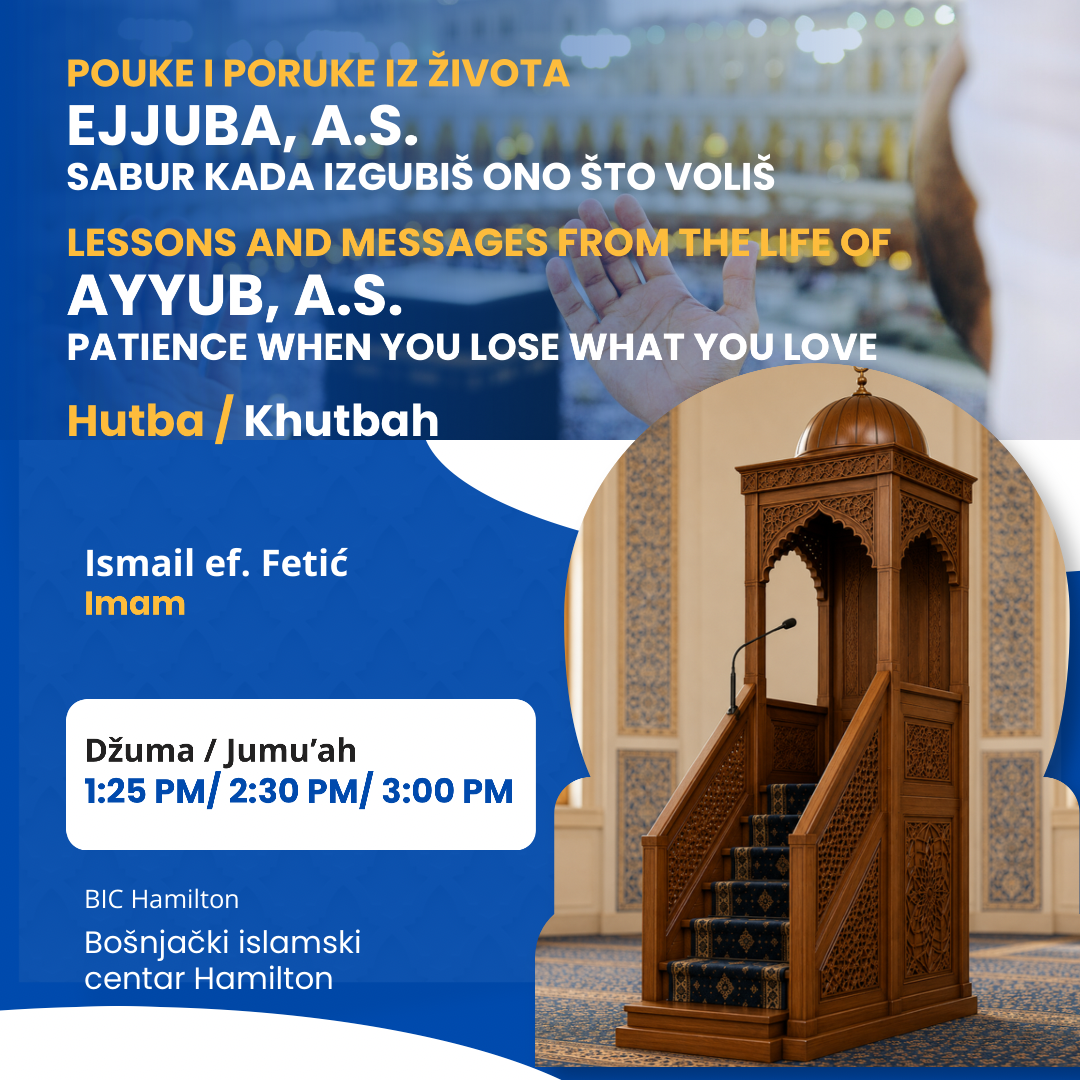 Pouke i poruke iz života Ejjuba, a.s.
Sabur kada izgubiš ono što voliš
Hvala Allahu, Gospodaru svih svjetova. Njega hvalimo, od Njega pomoć i oprost tražimo, i molimo Ga da nas uputi i učvrsti na Pravome putu. Neka su salavat i selam na našeg voljenog Poslanika Muhammeda, sallallahu alejhi ve sellem, njegovu porodicu, ashabe i sve one koji slijede njegov put do Sudnjeg dana.
Draga braćo i sestre,
Nastavljamo naša kazivanja o Allahovim poslanicima i pokušavamo iz njihovih života uzeti pouke i poruke koje možemo primijeniti u našem svakodnevnom životu. Allah nam o Svojim poslanicima ne govori samo da bismo znali šta im se dogodilo, nego da bismo kroz njihova iskušenja, njihov sabur, njihovu vjeru i njihovo oslanjanje na Allaha naučili kako se mi trebamo ponašati kada se nađemo pred iskušenjima vlastitog života.
Danas govorimo o Allahovom poslaniku Ejjubu, a.s., čovjeku čiji je život postao jedna od najvećih lekcija sabura.
Kada govorimo o saburu u islamu, gotovo da je nemoguće ne spomenuti Allahovog poslanika Ejjuba, a.s. Njegovo ime je kroz historiju postalo simbol strpljenja, ustrajnosti i nepokolebljive vjere u Allaha. Međutim, priča o Ejjubu, a.s., nije samo priča o bolesti. To je priča o čovjeku koji je izgubio gotovo sve što je imao, ali nije izgubio ono najvažnije, nije izgubio svoju vezu sa Allahom, džellešanuhu.
U vremenu u kojem ljudi često gube nadu zbog jedne poteškoće, jednog problema ili jednog razočarenja, život Ejjuba, a.s., podsjeća nas da vrijednost čovjeka nije u onome što posjeduje, nego u onome što nosi u svome srcu.
Braćo i sestre,
Prije iskušenja, Ejjub, a.s., živio je život kakav bi mnogi poželjeli. Allah mu je podario zdravlje, porodicu, ugled i imetak. Bio je čovjek kojeg su ljudi poštovali i kojem su se divili. Ali Allah ponekad iskušava upravo one koje voli.
Jedno po jedno, iskušenja su dolazila u njegov život. Izgubio je imetak. Izgubio je mnoge blagodati koje je imao. Zatim je izgubio zdravlje i ostao pogođen teškom bolešću koja je trajala godinama.
Ono što njegovu priču čini posebnom nije samo veličina iskušenja, nego način na koji je na njih odgovorio. Nije se okrenuo protiv Allaha. Nije izgubio vjeru. Nije prestao ibadetiti. Nije prestao zahvaljivati. Njegovo srce ostalo je vezano za Allaha čak i onda kada je izgubio skoro sve drugo. To je prva velika pouka iz njegovog života.
Mnogi ljudi vole Allaha kada je život lagahan. Međutim, prava snaga imana pokazuje se onda kada život postane težak. Lahko je zahvaljivati kada smo zdravi. Lahko je biti smiren kada sve ide po planu. Lahko je biti optimista kada nemamo problema. Ali šta se događa kada dođu iskušenja? Tada se vidi dubina naše vjere.
Draga braćo i sestre,
Jedna od najljepših stvari u priči o Ejjubu, a.s., jeste način na koji se obraćao Allahu. Nakon godina bolesti i teškoća nije se žalio ljudima, nije optuživao sudbinu i nije izgubio nadu.
Allah u Kur’anu prenosi njegovu dovu: “I Ejjuba, kada je Gospodaru svome zavapio: ‘Mene je nevolja dotakla, a Ti si od milostivih najmilostiviji!” (El-Enbija, 83)
Pogledajte ljepotu ove dove. Nema prigovora. Nema ljutnje. Nema očaja. Samo priznanje vlastite slabosti i potpuno povjerenje u Allahovu milost. Koliko nam je danas potrebna ova dova. Nekada se suočavamo sa bolešću. Nekada sa usamljenošću. Nekada sa brigama za svoju djecu. Nekada sa finansijskim problemima. Nekada sa gubitkom voljene osobe. U takvim trenucima Ejjub, a.s., nas uči da vrata dove nikada ne smijemo zatvoriti.
Braćo i sestre,
Još jedna važna lekcija iz njegovog života jeste da iskušenje nije znak da nas Allah ne voli. Naprotiv, Allahovi poslanici bili su najviše iskušavani ljudi.
Poslanik Muhammed, sallallahu alejhi ve sellem, je rekao: “Najviše su iskušavani vjerovjesnici, zatim oni koji su im najsličniji, pa oni koji su njima najsličniji.“ (Et-Tirmizi)
Koliko puta ljudi pomisle da ih je Allah napustio zato što prolaze kroz teškoće? Koliko puta se pitaju: „Zašto baš ja?“
Priča o Ejjubu, a.s., nas podsjeća da iskušenje nije dokaz Allahove srdžbe. Ponekad je upravo iskušenje način da nas Allah približi Sebi, očisti naše grijehe i podigne naš stepen kod Njega.
Draga braćo i sestre,
Posebno je važna poruka za naše vrijeme u kojem su ljudi postali veoma osjetljivi na svaku poteškoću. Živimo u društvu koje nas uči da moramo uvijek biti udobni, zadovoljni i bez problema. Međutim, život nije stvoren da bude bez iskušenja.
Allah kaže: “Onaj koji je stvorio smrt i život da bi vas iskušao koji će od vas bolje postupati; On je Silni, Onaj koji prašta.“ (El-Mulk, 2)
Nijedan život nije bez iskušenja. Nijedna porodica nije bez briga. Nijedan čovjek nije bez tereta. Razlika nije u tome ko ima iskušenja, nego kako se prema njima odnosi.
Ejjub, a.s., nas uči da iskušenje može slomiti čovjeka ili ga približiti Allahu. Izbor često zavisi od našeg odnosa prema Allahu.
Braćo i sestre,
Živimo u Kanadi gdje mnogi od nas uživaju brojne blagodati. Imamo sigurnost, mogućnosti za obrazovanje, zdravstvenu zaštitu i mnoge druge pogodnosti. Ali i ovdje ljudi prolaze kroz teška iskušenja. Mnogi se bore sa bolešću. Mnogi brinu za svoju djecu. Mnogi nose terete koje drugi ne vide. Neki se osjećaju usamljeno iako su okruženi ljudima. Neki se osmjehuju drugima dok u sebi vode teške bitke. Zato nikada ne znamo kroz šta neko prolazi.
Priča o Ejjubu, a.s., nas uči da budemo milostivi prema ljudima i da nikada ne sudimo o nečijem stanju na osnovu onoga što vidimo spolja.
Draga braćo i sestre,
Nakon godina iskušenja, Allah je podario olakšanje Ejjubu, a.s. Vratio mu je zdravlje, podario mu nove blagodati i nagradio ga zbog njegovog sabura.
To nas podsjeća da nijedno iskušenje ne traje vječno. Koliko god noć bila duga, zora će doći. Koliko god iskušenje bilo teško, Allahova pomoć je bliža nego što mislimo. Možda ne dolazi onda kada mi želimo. Možda ne dolazi na način koji očekujemo. Ali Allah nikada ne zaboravlja Svoje robove.
Braćo i sestre,
Priča o Ejjubu, a.s., uči nas da ostanemo blizu Allahu kada izgubimo ono što volimo, da ne izgubimo nadu kada iskušenja potraju, da ne mjerimo Allahovu ljubav količinom dunjalučkih blagodati i da uvijek vjerujemo u Njegovu milost.
Najveća poruka njegovog života jeste da čovjek može izgubiti zdravlje, imetak i mnoge blagodati, ali ako sačuva svoju vjeru i vezu sa Allahom, nije izgubio ono najvažnije.
A ako nas Ejjub, a.s., uči kako sačuvati sabur kada izgubimo ono što volimo, Jusuf, a.s., kojeg ćemo, ako Bog da, spomenuti u narednoj hutbi, uči nas još jednoj velikoj istini: ono što nama danas izgleda kao nesreća, sutra se može pokazati kao dio Allahovog savršenog plana.
Molimo Allaha Uzvišenog da nam podari sabur poput sabura Ejjuba, a.s., da izliječi naše bolesne, olakša našim porodicama njihove brige, podari nam snagu u iskušenjima i učini nas od onih koji Mu ostaju bliski.
Amin, ja Rabbe-l-’alemin
LESSONS AND MESSAGES FROM THE LIFE OF PROPHET AYYUB (A.S.).
Patience when you lose what you love
All praise is due to Allah, the Lord of all worlds. We praise Him, seek His help and forgiveness, and ask Him to guide us and keep us firm upon the Straight Path. May peace and blessings be upon our beloved Prophet Muhammad, sallallahu alayhi wa sallam, his noble family, his companions, and all those who follow his path until the Day of Judgment.
Dear brothers and sisters,
Today we continue our series about the Prophets of Allah, reflecting on their lives and trying to take from them lessons and messages that we can apply to our own lives. Allah does not tell us about His Prophets simply so that we know what happened to them. Through their trials, their patience, their faith, and their reliance upon Allah, we learn how we should respond when we face the trials of our own lives.
Today we reflect on Prophet Ayyub, peace be upon him, a man whose life became one of the greatest examples of patience.
When we speak about patience, or sabr, in Islam, it is almost impossible not to mention Prophet Ayyub, peace be upon him. Throughout Islamic history, his name has become a symbol of patience, perseverance, and unwavering faith in Allah. But the story of Ayyub, peace be upon him, is not simply a story about illness. It is the story of a man who lost almost everything he had, yet did not lose what mattered most. He did not lose his connection with Allah SWT.
In a time when people can lose hope because of one difficulty, one disappointment, or one unexpected change in life, the story of Ayyub, peace be upon him, reminds us that the true value of a person is not found in what they possess, but in what they carry within their heart.
Dear brothers and sisters,
Before his great trials began, Ayyub, peace be upon him, lived a life that many people would desire. Allah had blessed him with health, family, respect, and wealth. He was a man who had been given many of the blessings of this world.
But sometimes Allah tests those whom He loves.
One after another, trials entered his life. He lost his wealth. He lost many of the blessings he had enjoyed. Then he lost his health and was afflicted with a severe illness that continued for years.
What makes his story so remarkable is not only the severity of his trials, but the way he responded to them. He did not turn against Allah. He did not abandon his faith. He did not stop worshipping Allah. He did not stop being grateful. His heart remained connected to Allah even when almost everything else had been taken away.
This is one of the first great lessons from his life.
Many people find it easy to love Allah when life is comfortable. But the true strength of our iman is often revealed when life becomes difficult. It is easy to be grateful when we are healthy. It is easy to remain calm when everything is going according to our plans. It is easy to be optimistic when there are no major problems in front of us.
But what happens when the test comes? That is when the depth of our faith becomes visible.
Dear brothers and sisters,
One of the most beautiful parts of the story of Ayyub, peace be upon him, is the way he turned to Allah. After years of illness and hardship, he did not accuse Allah of being unfair. He did not complain about his destiny, and he did not lose hope in Allah’s mercy.
Allah tells us in the Qur’an: “And remember Ayyub, when he called upon his Lord, saying, ‘Indeed, adversity has touched me, and You are the Most Merciful of the merciful.’” (Surah Al-Anbiya, 21:83)
Look at the beauty of this du‘a. There is no accusation. There is no anger. There is no despair. There is simply an acknowledgement of his weakness and complete trust in the mercy of Allah.
How much we need this du‘a in our own lives.
Sometimes our test is illness. Sometimes it is loneliness. Sometimes it is worry about our children. Sometimes it is financial difficulty. Sometimes it is a problem within our family. Sometimes it is the loss of someone we deeply love.
In those moments, Ayyub, peace be upon him, teaches us that no matter how long a trial lasts, we should never close the door of du‘a.
Dear brothers and sisters,
Another important lesson from his life is that hardship is not necessarily a sign that Allah does not love us. In fact, the Prophets of Allah were among the most severely tested human beings.
The Prophet Muhammad s.a.w.s. said: “The people who are tested most severely are the Prophets, then those most like them, then those most like them.” (At-Tirmidhi)
How often does a person experience hardship and begin to think that Allah has abandoned them? How often do people ask, “Why me?”
The story of Ayyub, peace be upon him, reminds us that a trial is not necessarily evidence of Allah’s anger. Sometimes the trial itself becomes a means through which Allah brings us closer to Him, removes our sins, and raises our rank with Him.
Dear brothers and sisters,
This message is especially important in the world in which we live today. We live in a society that often teaches us that life should always be comfortable, convenient, and free from difficulty. We are surrounded by messages telling us that happiness means having everything we want and avoiding everything that causes discomfort. But life was never created to be free from trials.
Allah says: “He is the One who created death and life in order to test which of you is best in deeds. And He is the Almighty, the Most Forgiving.” (Surah Al-Mulk, 67:2)
No life is completely free from trials. No family is completely free from worries. No human being walks through this world without carrying some burden. The difference is not between those who are tested and those who are not. We are all tested in different ways. The difference is in how we respond to those tests.
Ayyub, peace be upon him, teaches us that hardship can either break a person or bring a person closer to Allah. Much depends on our relationship with Allah.
Dear brothers and sisters,
Living here in Canada, many of us enjoy blessings that millions of people around the world do not have. We have safety and stability. We have opportunities for education. We have access to healthcare and many other services and opportunities. These are blessings from Allah, and we should never take them for granted.
But living in a prosperous country does not mean living without hardship.
People around us are struggling every day. Some are struggling with illness. Some are worried about their children and the direction their lives are taking. Some are dealing with financial pressure. Some are experiencing difficulties within their marriages or families. Some are carrying the pain of losing someone they loved.
Others feel deeply lonely even though they are surrounded by people. Sometimes the person who smiles at us in the masjid, at work, or in our neighbourhood may be carrying a burden that we know nothing about.
This is another lesson we can take from the life of Ayyub, peace be upon him: be gentle with people. Do not judge someone’s life only by what you can see from the outside. We never truly know what another person is carrying in their heart or what they are facing when they return home.
Dear brothers and sisters,
After years of hardship, Allah brought relief to Ayyub, peace be upon him. Allah restored his health, gave him blessings again, and rewarded him for his patience. His story reminds us that no hardship lasts forever.
No matter how long the night may seem, morning eventually comes. No matter how difficult the trial becomes, the help of Allah may be closer than we realize. It may not come when we want it. It may not come in the way we expected. But Allah never forgets His servants.
Dear brothers and sisters,
The story of Ayyub, peace be upon him, teaches us to remain close to Allah when we lose something we love. It teaches us not to lose hope when our trials continue longer than we expected. It teaches us not to measure Allah’s love for us by the amount of worldly blessings we possess. And it teaches us to continue trusting in Allah’s mercy even during the most difficult moments of our lives.
The greatest message from the life of Ayyub, peace be upon him, is that a person may lose health, wealth, comfort, and many other blessings, but if that person preserves their faith and their relationship with Allah, then they have not lost what matters most.
And if Ayyub, peace be upon him, teaches us how to preserve our patience when we lose something we love, then Yusuf, peace be upon him, whom we will speak about, inshallah, in our next khutbah, teaches us another great truth: what looks like a tragedy to us today may tomorrow reveal itself to have been part of Allah’s perfect plan.
May Allah Almighty grant us patience like the patience of Ayyub, peace be upon him. May Allah cure those among us who are sick, bring relief to our families in their difficulties, give us strength during our trials, and make us among those who remain close to Him in times of ease and in times of hardship. Ameen, Ya Rabb al-‘Alameen.
Imam Ismail Fetic